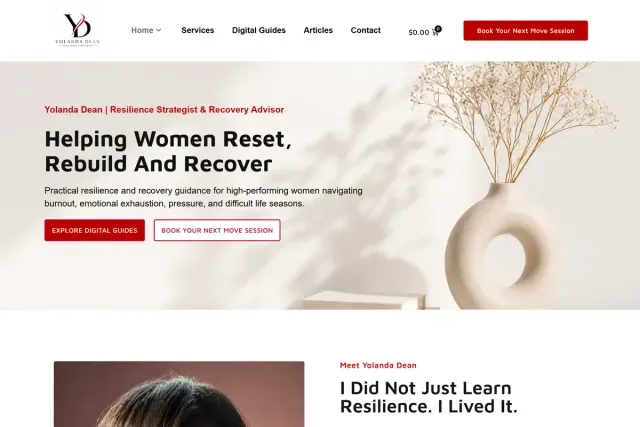
Yolanda Dean
A resilience strategist and performance advisor's website with services, articles, books and digital guides sold through WooCommerce, with SEO set up from the start. Read the case study.
Coach website design
Your website should do what a great first session does: build trust quickly and make the next step obvious. I design coaching websites that explain your approach, show real results and turn visitors into discovery calls.
Examples
Real websites I designed and built for coaches, wellness brands and performance experts.
A resilience strategist and performance advisor's website with services, articles, books and digital guides sold through WooCommerce, with SEO set up from the start. Read the case study.
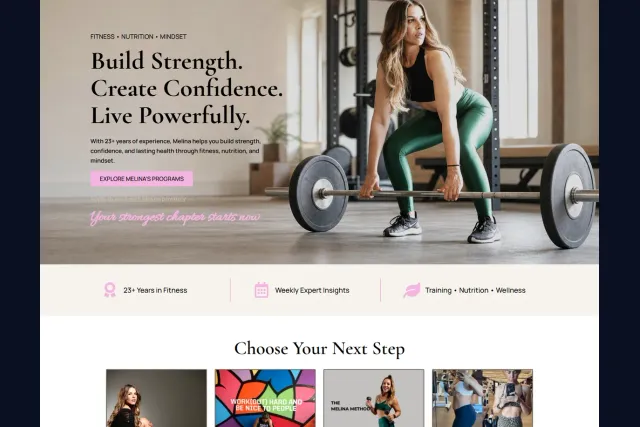
A fitness, nutrition and mindset coaching brand with personal training, online programs and resources, redeveloped and launched on WordPress. Read the case study, or see her podcast and supplement shop, The Melina Method, on Shopify.

A multilingual one-page website in German for a coach and motivational speaker, built to reach a wider audience. View the project.
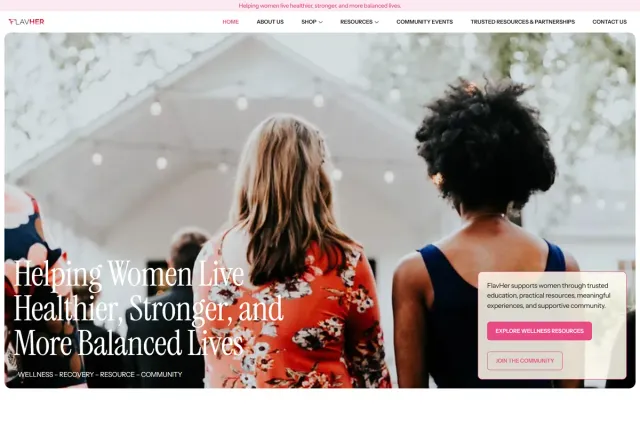
A women's wellness and recovery community moved from Wix to WordPress, with resources, events and a shop. Read the case study.
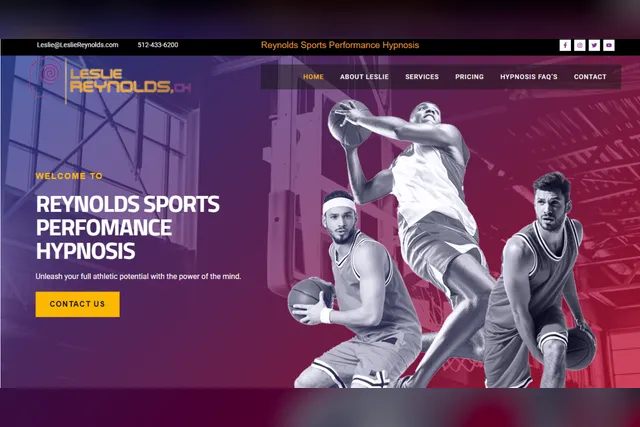
A mental performance website for athletes, presenting sports performance hypnosis programs. View the project.
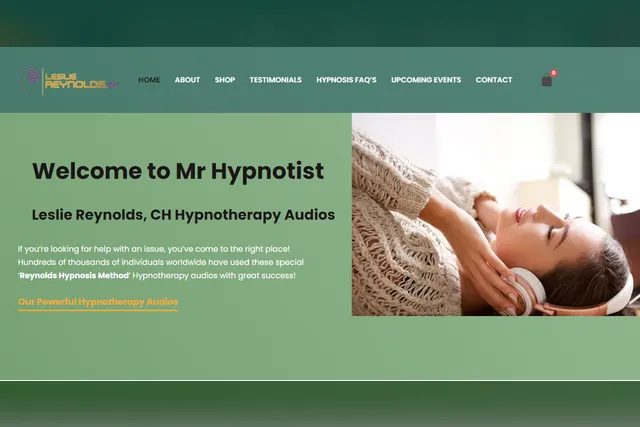
Hypnosis audio programs sold online with WordPress and WooCommerce, in a calm design that builds trust. Read the case study.
Video testimonials
In their own words: what it was like to work with me and my team. More in client testimonials.
Direct answer
The short version, before the details.
A great life coach website makes visitors feel understood within seconds. It says clearly who you help and how, proves it with real stories and testimonials, and makes booking a discovery call effortless. Behind the scenes it collects email sign-ups, loads fast on phones and is easy for you to update.
What's included
The features that turn a visitor into a discovery call, and a discovery call into a client.
Your scheduling tool, such as Calendly or TidyCal, built into the site, or bookings handled in WordPress, so visitors pick a time in a few clicks.
Clear pages for each program: who it is for, what changes, how it works and how to start.
A free guide, quiz or video that grows your email list, connected to tools such as Mailchimp, MailerLite or Kit.
Client stories and testimonials placed where visitors hesitate, so proof is never more than a scroll away.
An about page that explains why you coach and how you work, so the right clients feel they already know you.
Sell programs, guides and audio with WooCommerce, and add courses or memberships when you are ready.
Who it is for
The structure changes with the way you coach. These are the most common.
A warm, personal site that explains your approach, shares client stories and makes the discovery call the obvious next step.
Business coaching website design with case studies, corporate programs, a speaking page and a professional enquiry process.
Calm, trustworthy design with programs, resources, a newsletter and, if you need it, a shop for guides or products.
Online programs, memberships, transformation stories and booking for personal training, like the Melina Fitness website.
A sensitive, welcoming site with clear services, privacy-friendly enquiry forms and helpful articles.
Programs, audio sessions and results presented with authority, as on the Reynolds Sports Performance site.
Choosing a platform
An honest comparison. The best choice depends on how you want to grow.
| Platform | Best for | Watch out for |
|---|---|---|
| WordPress | Coaches who want full control over design, SEO, booking, products and future features | Needs setting up and looking after, which I handle with maintenance packages |
| Squarespace or Wix | A simple site you want to build and edit yourself | Fewer options for SEO and custom features as your business grows |
| Kajabi | Courses, email and payments in one subscription | Higher monthly cost and less flexibility in design and SEO for the main website |
Many coaches use WordPress for their website and connect a course or scheduling tool to it, which keeps the site flexible while using the best tool for each job.
Process
You focus on your clients. I handle the website.
Common questions
Quick answers about cost, booking, selling programs and platforms.
It depends on the number of pages and features, such as discovery-call booking, an email sign-up, a blog or selling programs online. After a short call you get a clear scope and quote before any work starts.
Yes. Your scheduling tool, such as Calendly or TidyCal, can be embedded on the site, or bookings can be handled inside WordPress, so visitors can pick a time without emailing back and forth.
Yes. Programs, digital guides and audio products can be sold with WooCommerce, and memberships or courses can be added as your business grows.
Squarespace suits a simple site you manage yourself, and Kajabi bundles courses and email in one subscription. WordPress gives you the most control over design, SEO and features as your business grows. Many coaches use WordPress for the website and connect a course or scheduling tool.
Yes. I redesign coaching websites on WordPress and move sites from builders such as Wix, keeping your content and protecting your search rankings with redirects.
Yes. Many coaches also speak, and one website can present both your coaching programs and your speaking topics. See speaker website design.
Ready for more discovery calls?
Tell me about your coaching and the clients you want to reach. You will get a clear plan, scope and quote.